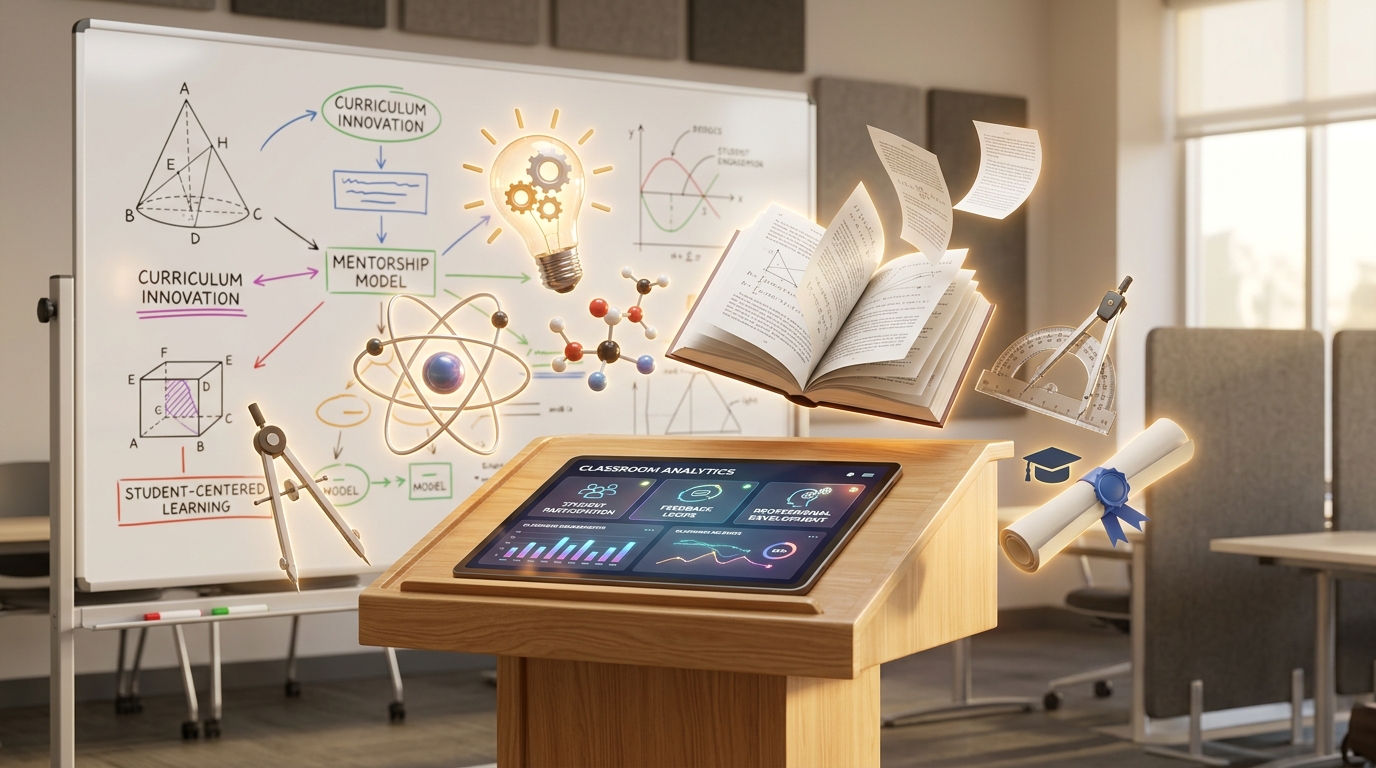
The Art of 21st-Century Teaching: How Certified Faculty Elevate Student Potential
An educational institution’s ultimate standard of excellence is never defined merely by the architecture of its buildings or the technology in its laboratories—it is determined entirely by the dedication, intellectual depth, and pedagogical skill of its faculty. Great teachers do not simply transmit curriculum content; they awaken curiosity, inspire resilience, and illuminate the unique potential latent within every student.
At Al-Faisal School System, our faculty of 67+ certified educators participate in an intensive, ongoing professional development ecosystem. We have evolved past 19th-century rote lecturing to embrace 21st-century inquiry-based instructional design.
The Al-Faisal Faculty Professional Development Pipeline
Continuous pedagogical training ensures that our educators remain at the leading edge of modern classroom methodologies:
1. Evolving from ‘Sage on the Stage’ to Facilitator of Inquiry
In outdated instructional models, the teacher stands at the blackboard lecturing continuously while students passively copy notes. At Al-Faisal, our educators act as dynamic facilitators. Lessons begin with thought-provoking real-world problems or scientific demonstrations that prompt students to debate, analyze, and formulate solutions collaboratively before the underlying theorem is introduced.
2. Differentiated Learning in Practice
Every classroom contains diverse learners with varying speeds of comprehension. Our faculty structure lessons with tiered challenges: baseline exercises ensuring foundational concept clarity for all, followed by intermediate application word problems, and advanced conceptual investigations that challenge high-achieving scholars.
3. The Power of Empathetic Mentorship
Children do not learn from people they do not trust. Al-Faisal teachers build warm, respectful relationships with their students, celebrating small improvements and providing a safe space where making a mistake is treated not as a failure, but as the essential first step toward true understanding.